The Interview: Bookbag Talks To Ariel Saramandi
| The Interview: Bookbag Talks To Ariel Saramandi
| |
| Summary: In this powerful collection of essays, Saramandi seeks to intradermally dissect the sociopolitical fabric of Mauritius, tunneling deep into the wounds left by colonialism and slavery to expose how these legacies still shape modern life. | |
| Date: July 2025 | |
Interviewer: Heather Magee
 | |
|
Share on: | |


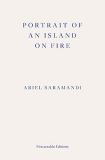
In this powerful collection of essays, Saramandi seeks to intradermally dissect the sociopolitical fabric of Mauritius, tunneling deep into the wounds left by colonialism and slavery to expose how these legacies still shape modern life.
- Bookbag: We usually ask authors about who they feel their readers are, but actually we'd like to start by asking you about the style of your essays. What is your process when beginning to structure an essay? What about the essay form attracts you most? In what ways do you, as you put it in one of your most recent Substack posts (The question I'm dreading), experiment[s] with the form?
Ariel Saramandi: I like to see the essay as a vessel, and experiment with just how much it can contain before it breaks or overflows - the point at which narrative ruptures. I like to think that my essays are on the brink of rupture, or when they do break – I often use fragments – they form a cohesive whole in the use of their parts.
- BB: Does essay writing help you process what you see and hear? In other words, is this a practice purely concerned with activism (as you put it, a desperate rummaging of actions that are possible in a crisis) or a kind of mental processing, too?
AS: It’s a way to process, to understand and to investigate. A lot of my work involves rummaging through archives or historical texts. In many ways, too, I feel that my essays continue the academic work that I wasn’t able to pursue.
- BB: Your essays touch on a variety of difficult themes, and some of your own personal experiences bleed into their narratives, which makes them extremely compelling. Which essay was the most difficult to write and why?
AS: An Education, by far, for an obvious reason: I was writing about my family, in one of our darkest times.
- BB: What was the experience like of revisiting these essays, some of which you had written years before? What, if anything, has changed since then?
AS: I felt actually quite relieved in seeing that they held up! So I updated them as much as possible so that the book would reflect a thorough scope of events from 2014-2024.
- BB: Your despair at the lack of awareness for SIDS (Sudden Infant Death Syndrome) is evident in the book. How has being a mother increased your political sensibility surrounding these issues in Mauritius?
AS: It’s made me more urgent about my activism, and that urgency has driven me forward in ways that are sometimes aberrant to my personality. I hate putting myself ‘out there’, as it were, but I will sit in a governmental office for however long I need, I will contact whoever I need to in order to get some kind of change effected.
- BB: You talk about the disaster aesthetics of the climate crisis in Mauritius in your essay Death takes the Lagoon. How do you think that these aesthetics have proliferated as the crisis worsens? How do disaster aesthetics compare to the aestheticisation of Mauritius as a paradise island?
AS: I think there’s a danger to these aesthetics, and there’s a moral responsibility to photographing the island and its people. Basically, we’re photographed in clichés, and it’s rare to see Mauritians portrayed as anything else than good, subservient, servile employees (I’m thinking of hospitality images) or as angry people (when photographed in a crisis). There are a number of excellent photographers and artists here, but their work doesn’t necessarily get much coverage internationally, so foreigners don’t get to see what makes us us. I hope that my book changes that, which is why my essays aren’t just concerned with my lived experience: they explore other Mauritian lives, too.
- BB: Having read 10 years in Power, it is clear that Bruneau Laurette was simultaneously the subject of your pity, amazement and disappointment - but what overall makes him such an interesting figure for you as one of the focal points of this remarkable essay?
AS: He’s an incredible figure, for me, because he strove to exist outside of these stale, rigid ideas of what a man like him could be in Mauritian society. He tried really, really hard. And he’s still trying.
- BB: In your opinion, what makes now the right time for the collection to be published?
AS: I don’t know if there’s ever a right time, to be honest, but I am glad it comes at a time of greater worldwide solidarity, particularly when it comes to the genocide in Palestine.
- BB: What do you think the future holds for Mauritius? What do you hope for?
AS: There will be, very clearly, a radical rupture in the established political parties of Mauritius: both leaders of the MMM and the Labour Party are advanced in age and have had health problems in the past. Within the next five years, their parties’ leadership will have to change hands. I hope that the leaders to come will be committed to socialism and to ecological reform. I hope they are advised by people who excel in their fields. I hope they break free of tradition, of caste politics, of how the public sector is run.
- BB: What's next for Ariel Saramandi?
AS: The essay collection will be published in North America in December, so it’ll be interesting for me to see how the book will be received there. Other than that - you can find me at home, writing quietly in odd hours.
- BB: Thank you so much for taking the time to answer our questions and we hope that the book does as well as it deserves.
You can read more about Ariel Saramandi here.
 Check out Bookbag's exciting features section, with interviews, top tens and editorials.
Comments
Like to comment on this feature?
Just send us an email and we'll put the best up on the site.